
Chilli Amazonika With Smoky Beans and Veggie Mince
Updated: May 11
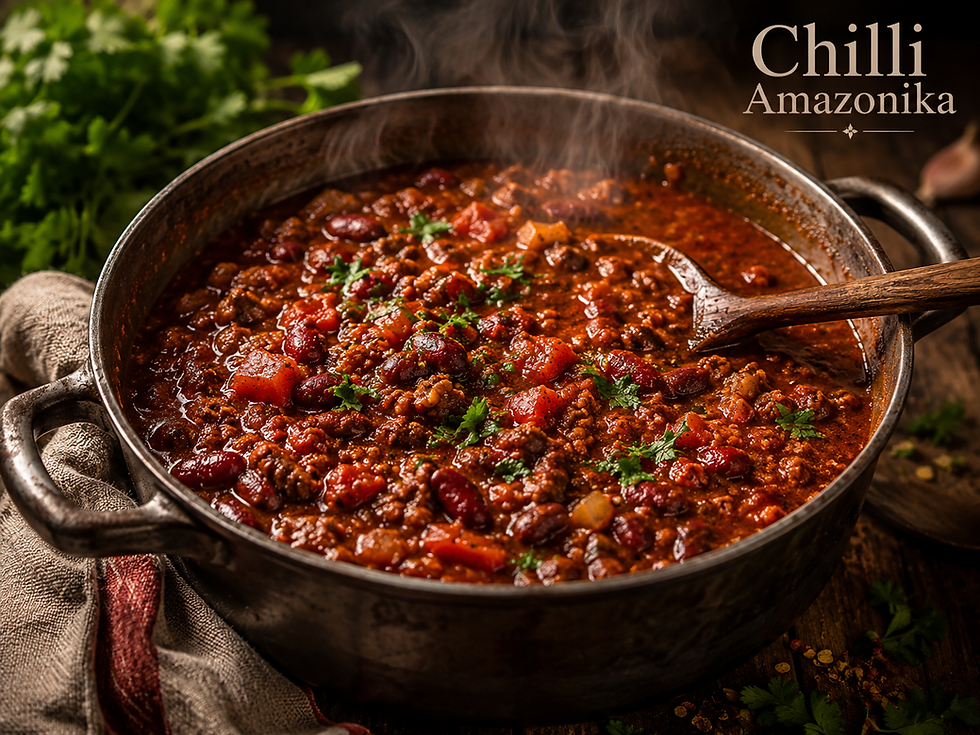
Some recipes feel built for cold evenings, loud conversations, and bowls held with both hands.
This chili is one of them.
Rich tomatoes simmer down into a deep smoky sauce while red beans hold their shape just enough to keep texture in every spoonful. The veggie mince brings savory depth that settles naturally into the spices rather than fighting for attention.
Then the cocoa powder appears quietly in the background.
Not enough to taste like chocolate. Just enough to deepen the warmth and pull the smoky paprika, cumin, and tomatoes into something fuller and slower.
The result feels comforting in a very grounded way. Thick enough to feel satisfying, bright enough to avoid heaviness, and layered enough that the flavor keeps changing slightly as it cooks.
By the time the pot reaches the table, the aroma has usually done most of the convincing already.
Why This Recipe Works
Good chili depends on patience more than complication.
The spices need time to bloom properly in oil. Tomatoes need enough heat to soften and concentrate. Beans should stay intact while still absorbing flavor from the sauce around them.
This version works because each ingredient plays a clear role.
The red beans create body and texture. Veggie mince adds savory richness without making the chili greasy. Smoked paprika and cumin build warmth while curry quietly rounds out the edges. The cocoa powder deepens the overall flavor profile in a surprisingly subtle way.
A few details make this chili especially satisfying:
Rich texture without excess heaviness
Balanced spice and smokiness
Naturally high in plant-based protein
Excellent for batch cooking
Deep flavor from simple pantry ingredients
Easy to adapt for Indian spice preferences
The fresh herbs added near the end keep the entire pot feeling alive rather than overly dense.
That freshness matters.
Ingredients
For the Chili Base
1 cup red beans
4 cups boiling water
1 cup chopped onion
4 cloves garlic, crushed
1 cup chopped tomatoes
1 tablespoon tomato paste
Olive oil for cooking
For the Spice Blend
1 teaspoon cumin
1 teaspoon curry powder
1 teaspoon spicy paprika
1 teaspoon smoked paprika
1 teaspoon oregano
1 teaspoon cocoa powder
For the Protein and Herbs
Pre-cooked veggie mince
½ cup chopped parsley
½ cup chopped cilantro
Fresh coriander
Salt and pepper to taste
Step-by-Step Method
1. Cook the Beans
Add the red beans and boiling water into a pressure cooker.
Cook for about 20 minutes after the cooker begins to whistle. The beans should become tender while still holding their shape.
Drain and set aside.
Avoid overcooking. Chili feels better when the beans maintain texture rather than collapsing completely into the sauce.
2. Build the Aromatic Base
Heat olive oil in a large pan or heavy pot.
Add chopped onion and cook until translucent and lightly golden around the edges. Stir in the crushed garlic and cook briefly until fragrant.
At this stage, the kitchen should smell warm and savory with slightly sweet onion notes.
3. Add the Veggie Mince
Stir the pre-cooked veggie mince into the pan.
Allow it to cook for a few minutes until lightly browned and coated with the onion and garlic mixture.
The browning helps deepen the final flavor considerably.
4. Bloom the Spices
Add cumin, curry powder, spicy paprika, smoked paprika, oregano, cocoa powder, and coriander.
Stir continuously so the spices coat the mince evenly and release their aroma into the oil.
This step changes the entire dish. The smell becomes deeper, warmer, and noticeably smokier within seconds.
5. Build the Sauce
Add chopped tomatoes and sauté until they soften and begin breaking down naturally.
Stir in tomato paste along with about ½ cup water. Allow the mixture to simmer gently until the sauce thickens slightly.
The texture should feel rich and spoonable rather than watery.
6. Add the Beans
Fold the cooked beans into the chili.
Simmer for several more minutes so the beans absorb flavor while still remaining whole.
Taste and adjust salt and pepper as needed.
7. Finish With Fresh Herbs
Turn off the heat and stir through parsley, cilantro, and fresh coriander.
The herbs brighten the chili immediately and balance the smoky richness beautifully.
Serve hot.
Sensory Experience
The aroma arrives first.
Smoked paprika, cumin, garlic, tomato, and slow-cooked beans create a warmth that feels instantly comforting. There’s also a deeper roasted note underneath from the cocoa powder, though most people won’t identify it directly.
They’ll just notice the chili tastes fuller.
Texture matters here too.
The beans stay tender but structured while the veggie mince thickens the sauce naturally. Tomatoes soften into the base until everything feels cohesive without becoming heavy or muddy.
Each spoonful carries a gentle heat that builds slowly rather than aggressively.
Visually, the chili develops a rich deep-red color with darker pockets of spice and glossy tomato sheen across the surface.
Rustic in the best possible way.
Serving Suggestions
This chili adapts easily depending on the mood and occasion.
Serve it:
With steamed rice
Beside toasted bread
Over baked potatoes
With warm tortillas
Topped with avocado slices
Alongside grilled corn
For gatherings, place the chili in a large cast-iron pot with toppings served separately. Fresh herbs, lime wedges, chili flakes, and crushed tortilla chips all work beautifully.
Storage Tips
Refrigerate for up to 4 days
Flavor deepens significantly overnight
Freeze portions for up to 2 months
Reheat slowly over low heat with a splash of water if needed
Chili is one of those dishes that often tastes even better the next day.
Pro Tips
Do not overcook the beans
Bloom spices properly before adding tomatoes
Add cocoa powder carefully, not excessively
Let the chili simmer uncovered briefly for better texture
Fresh herbs should go in near the end
Smoked paprika makes a major difference here
Indian Adaptation Angle
This chili already shares some similarities with Indian-style bean dishes, which makes adaptation very natural.
Adding ingredients like green chili, roasted cumin, kasuri methi, or even a touch of garam masala can shift the flavor profile beautifully without losing the soul of the recipe.
Serving it with jeera rice, toasted pav, or even paratha creates a comforting crossover between smoky chili and Indian comfort food.
The spice structure already leans warmly familiar.
Plant-Based Cooking With Depth and Substance
Plant-based comfort food works best when it focuses on texture, warmth, and layered flavor rather than trying too hard to imitate meat directly.
Amazonika Mundi’s veggie mince supports that approach naturally. Using upcycled cashew apple fiber creates satisfying bite while contributing to a more sustainable and circular food system.
That matters because the future of plant-based cooking is increasingly about thoughtful ingredients that function well in real meals people genuinely crave.
A pot of chili like this proves the point quietly.
No compromises. Just good cooking.
Frequently Asked Questions
➢ Can I make this chili less spicy?
Yes. Reduce the spicy paprika and add more smoked paprika instead for warmth without strong heat.
➢ Why add cocoa powder to chili?
Cocoa deepens the flavor subtly and balances acidity and smokiness without making the dish sweet.
➢ Can I use canned beans?
Absolutely. Drain and rinse them well before adding to the chili.
➢ What toppings pair best with vegan chili?
Avocado, chopped herbs, vegan sour cream, lime wedges, and crushed tortilla chips all work beautifully.
➢ Is this recipe good for meal prep?
Very much so. Chili stores and reheats exceptionally well.
➢ Can I add more vegetables?
Yes. Bell peppers, corn, zucchini, or mushrooms blend naturally into the chili base.
Final Thoughts
Some recipes become comforting because they’re familiar. Others because they slow people down long enough to enjoy them properly.
This chili somehow does both.
The smoky depth, tender beans, rich tomato base, and warming spices create a bowl that feels generous without becoming overly heavy. It’s deeply satisfying food built from simple ingredients handled carefully.
And honestly, that’s usually where the best comfort cooking begins.


