
Veggie Mince Gyoza With Citrus Soy Dipping Sauce
Updated: May 11
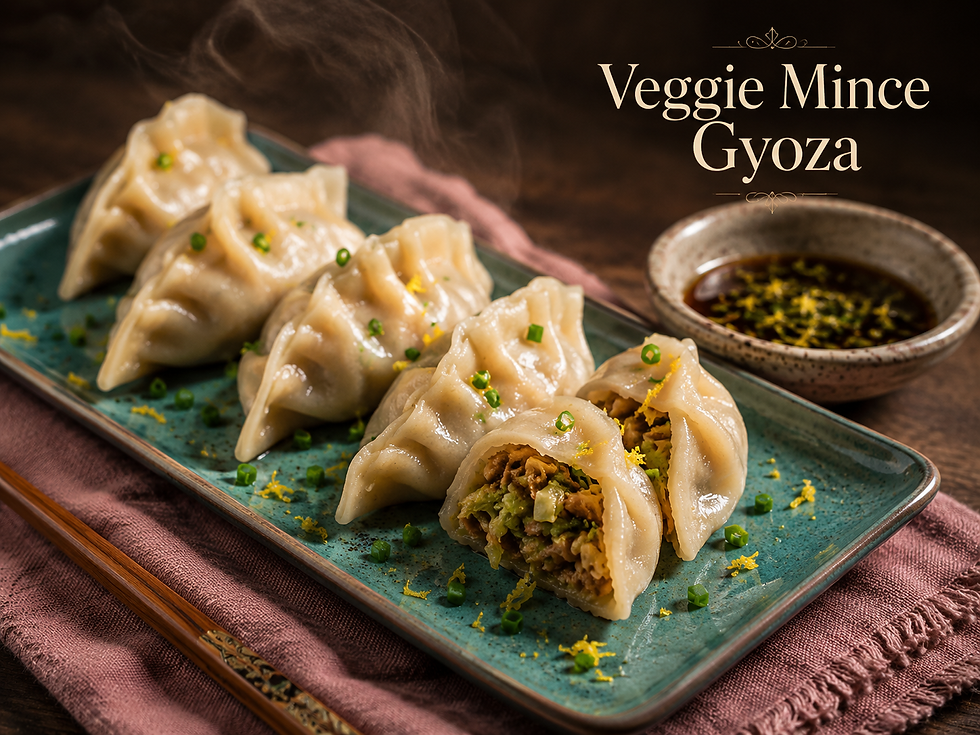
There’s a moment right before gyoza hits the plate when the steam carries everything together. Warm dough, ginger, toasted sesame, savory filling. It smells comforting in a way that feels almost impossible to rush.
These veggie mince gyoza lean into that experience fully.
The wrappers stay delicate and slightly chewy while the filling turns rich, juicy, and deeply savory from the combination of cabbage, green onions, and plant-based mince.
Pan-fried, the bottoms develop a light golden crust that crackles gently under the chopsticks. Steamed, they become softer and silkier with a cleaner finish.
Both versions work beautifully.
What makes this recipe especially satisfying is how naturally the veggie mince settles into the structure of classic gyoza. The texture feels substantial without becoming heavy, and the citrus soy dipping sauce cuts through the richness with just enough brightness.
This is comfort food with precision, but still relaxed enough to make at home without turning the kitchen upside down.
Why This Recipe Works
Good gyoza depends on balance more than complexity.
The filling needs moisture without becoming watery. The wrapper should feel thin but still strong enough to hold steam. The dipping sauce has to sharpen the richness rather than overpower it.
This version gets there through a few smart details.
The cabbage softens into the veggie mince while still keeping slight texture. Green onions bring freshness and a mild bite. A little oil binds the filling naturally and helps carry flavor through the dumplings.
The homemade dough matters too.
Using boiling water creates a softer, more elastic wrapper that stays tender after steaming and develops beautiful chew when pan-fried lightly.
A few reasons this recipe works especially well:
Delicate wrappers with satisfying bite
Rich plant-based filling without heaviness
Crisp pan-fried texture option
Easy to batch cook and freeze
Naturally high in plant-based protein
Adaptable for Indian flavor profiles
The lemon in the dipping sauce is subtle but important. It lifts the savory depth and keeps each bite feeling fresh.
Ingredients
For the Filling
50 g cabbage, finely chopped
50 g green onions, finely chopped
200 g pre-cooked veggie mince
Soy sauce, optional
Vegetable oil as needed
For the Dough
500 g wheat flour
250 ml boiling water
Extra flour for dusting
For the Dipping Sauce
150 ml soy sauce
50 ml water
1 coffee spoon toasted sesame oil
Ginger broth to taste
Juice of 2 lemons
Chopped chives to taste
Step-by-Step Method
1. Prepare the Filling
Finely slice the cabbage and green onions.
Place them into a bowl with the pre-cooked veggie mince. Add soy sauce if using and mix gently. Drizzle in vegetable oil little by little until the filling becomes slightly pasty and cohesive.
The mixture should feel moist enough to hold together without becoming wet.
Let it rest for a few minutes while preparing the dough.
2. Make the Dough
Place the flour into a large bowl.
Pour in the boiling water gradually while mixing with chopsticks or another thin utensil. The heat helps partially cook the flour, creating a smoother dough texture later.
Once the dough cools enough to handle, transfer it onto a clean surface and knead until smooth.
If it feels sticky, dust lightly with flour. If too dry, dampen your hands slightly while kneading.
The final dough should feel soft, flexible, and elastic.
3. Shape the Wrappers
Cut a portion of dough and roll it into long thin ropes.
Slice into small pieces similar in size to gnocchi. Flatten each piece lightly, then roll into thin circular wrappers using a rolling pin.
Try to keep the edges slightly thinner than the center. This helps the folds cook evenly without becoming dense.
4. Fill and Seal
Place a spoonful of filling into the center of each wrapper.
Fold and seal carefully, pressing out excess air as you pleat the edges. The folds do not need to look perfectly uniform. Handmade gyoza always carry more character when they look slightly imperfect.
Place finished dumplings on a lightly floured tray.
5. Steam the Gyoza
Arrange cabbage leaves inside a steamer or metal strainer.
Place the gyoza slightly apart so they do not stick together during cooking. Steam for 15 to 20 minutes until the wrappers become slightly translucent and tender.
The filling inside should feel juicy and aromatic.
6. Optional Pan-Fried Finish
For crisp-bottom gyoza, heat a nonstick skillet with a small amount of oil.
Pan-fry the steamed dumplings briefly until the bottoms turn golden and lightly crisp.
Avoid over-frying. Gyoza should stay delicate rather than crunchy all over.
7. Prepare the Sauce
Mix soy sauce, water, toasted sesame oil, ginger broth, lemon juice, and chopped chives in a small bowl.
Taste before serving. The sauce should feel balanced between savory, citrusy, and lightly nutty.
Sensory Experience
Fresh gyoza have a very specific kind of warmth.
The wrappers feel soft and slightly glossy from steam, while the filling inside stays juicy enough to release flavor immediately after the first bite. Pan-fried versions add another layer entirely. Crisp golden bottoms give way to tender dough and savory filling underneath.
There’s gentle sweetness from cabbage, brightness from green onion, and deep umami notes from the veggie mince.
The dipping sauce sharpens everything.
Lemon and ginger lift the richness while sesame oil leaves a warm roasted aroma lingering at the end.
Visually, the pleated folds create beautiful texture naturally. Even simple plating feels elegant with gyoza.
Serving Suggestions
These dumplings work beautifully as both appetizer and light meal.
Serve them:
With citrus soy dipping sauce
Alongside miso soup
With spicy chili oil
As part of a shared small-plate dinner
With stir-fried greens
Beside jasmine or sticky rice
For gatherings, arrange them on a long ceramic platter with dipping bowls scattered casually around the table. Steam rising from fresh gyoza always creates immediate visual appeal.
Storage Tips
Refrigerate cooked gyoza for up to 3 days
Reheat gently in a pan or steamer
Freeze uncooked dumplings on a tray first before transferring to containers
Cook directly from frozen with slightly longer steaming time
Avoid overcrowding while freezing so the wrappers stay intact.
Pro Tips
Keep unused dough covered while shaping
Chop cabbage finely for smoother filling texture
Remove excess air while sealing
Lightly oil the steamer surface if needed
Rest the dough before rolling for easier shaping
Pan-fry only until lightly crisp, not deeply browned
Indian Adaptation Angle
Gyoza adapts surprisingly well to Indian flavor preferences.
A touch of green chili, crushed coriander seed, or finely chopped garlic instantly shifts the flavor profile while still respecting the original structure of the dish. Even small additions like chili crisp or toasted cumin can create a warmer, more familiar finish.
The dipping sauce also works beautifully with Indian citrus varieties and fresh coriander.
Served with masala chai during rainy evenings, these dumplings almost feel like a cross between momo culture and Japanese comfort food.
That crossover works naturally.
A Smarter Approach to Plant-Based Texture
One challenge with many plant-based fillings is achieving texture without relying on heavy processing or excessive additives.
Amazonika Mundi’s veggie mince approaches it differently. By using upcycled cashew apple fiber, the ingredient creates satisfying bite while supporting a more circular food system.
That matters because modern plant-based cooking is moving beyond simple replacement. Texture, sustainability, and real culinary usability now matter just as much as ingredient labels.
Recipes like these show how naturally that shift can fit into everyday cooking.
Frequently Asked Questions
➢ Can I freeze veggie mince gyoza?
Yes. Freeze them uncooked on a tray first, then store in airtight containers once firm.
➢ What is the difference between steamed and pan-fried gyoza?
Steamed gyoza stay softer and silkier, while pan-fried versions develop crisp golden bottoms with more texture contrast.
➢ Can I use store-bought wrappers?
Absolutely. Homemade wrappers offer better texture, but store-bought wrappers save time and still work well.
➢ How do I keep gyoza from sticking?
Use cabbage leaves, parchment paper, or light oil inside the steamer.
➢ What sauces pair best with vegan gyoza?
Soy-based sauces, chili oil, sesame dipping sauce, ponzu, or garlic vinegar all pair beautifully.
➢ Are these suitable for meal prep?
Very much so. Gyoza freeze exceptionally well and cook quickly from frozen.
Final Thoughts
Good dumplings carry a certain rhythm to them. Rolling, folding, steaming, dipping. None of it feels rushed.
These veggie mince gyoza bring together softness, warmth, texture, and deep savory flavor in a way that feels comforting without becoming too heavy. They’re elegant enough for guests but relaxed enough for a quiet evening meal at home.
And once you get comfortable shaping them, making a full tray becomes oddly calming.


